 English
 български
 Deutsch
 Español
 Polski
 Русский
 Română
 Türkçe
 Українська


Nessebar Old Town Guide: What to See, Tickets, Hours and Parking.
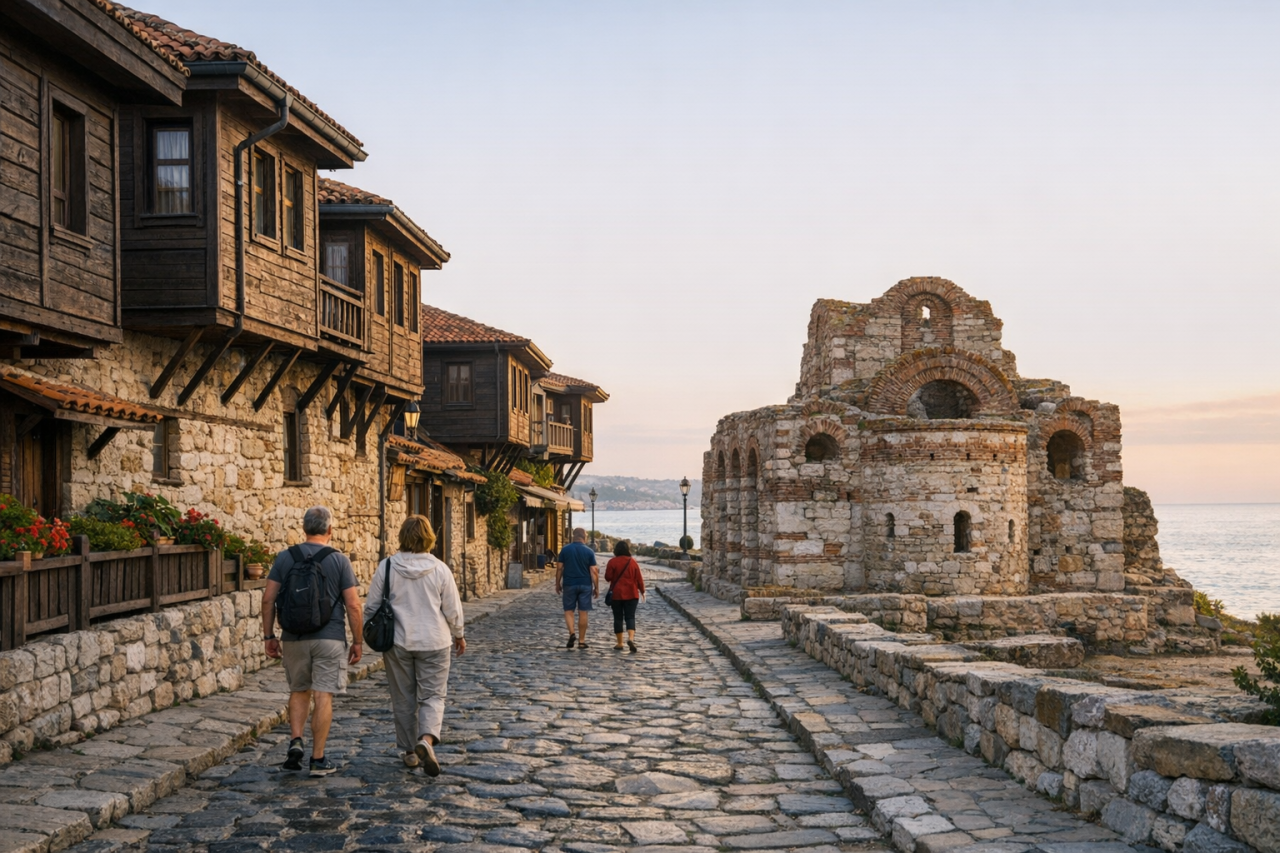
Nessebar Old Town is the best-known heritage site near Ravda, and it rewards a little planning. The historic part sits on a small rocky peninsula, the streets are cobbled, the ticket system is split across several small monuments, and the opening hours change sharply with the season. This guide pulls together what a September 2026 visitor guide and UNESCO's own description say, so you can decide what to see, when to go and what it costs. Prices and hours below come from one recent private guide, so confirm them on the day.
Why Nessebar Old Town is worth the trip
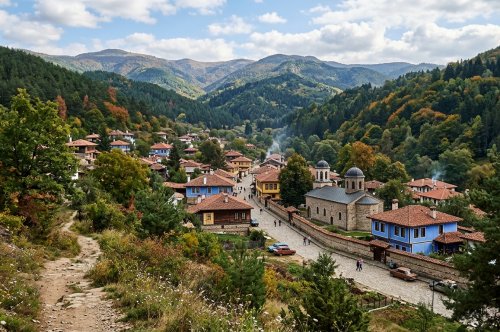
UNESCO inscribed the Ancient City of Nessebar in 1983. The site covers 34.72 hectares on a rocky peninsula and began as a Thracian settlement called Menebria before becoming a Greek colony in the early 6th century BC.
The visible layers are what make it special. UNESCO lists Hellenistic remains such as an acropolis, a temple of Apollo, an agora and part of a Thracian wall. It also lists medieval monuments, including the Stara Mitropolia basilica and a fortress from the Byzantine period, plus 19th-century wooden houses typical of Black Sea architecture.
That mix is the reason to go. You are not visiting one monument; you are walking through two and a half thousand years in an area of roughly 850 by 350 metres, according to the 2026 visitor guide.
One honest caveat: UNESCO's own notes mention unauthorised changes to some historic buildings and pressure from tourism. The 2026 visitor guide also reports that advisory bodies proposed in January 2023 that the site be considered for the List of World Heritage in Danger. Expect a living, commercial town rather than an untouched museum.
When to go: seasons and the October change
Timing matters more here than in most places. The 2026 visitor guide says the old town can see more than 30,000 visitors a day in summer, with the crush from around midday to about 19:00. Its advice is to arrive before 10:00 or after roughly 18:00 to 20:00.
Opening hours also change. According to that guide:
- In high season (2 June to 14 September), the Archaeological Museum and the Church of St Stephen open 9:00 to 19:00.
- The smaller churches and the windmill open 10:30 to 14:00 and again 14:30 to 19:00, so they close around midday.
- From 13 October to the end of March, the small churches and museums are practically closed except by special arrangement. Only the Archaeological Museum and St Stephen stay open, until 17:00.
Today is mid-October, so this off-season pattern applies right now. If you want to go inside several churches, the guide's timetable suggests summer or early autumn is far easier. If you simply want to walk the lanes and the sea walls, October and winter are quiet and pleasant, though you should treat any single day's hours as unconfirmed until you see them posted.
Sea temperatures matter if you combine the visit with a swim. The same guide gives monthly averages of 23.1 °C in June, 26.4 °C in August and 24.7 °C in September.
What to see: the sights that are worth your time
The guide describes five churches you can enter: St Stephen, St Saviour, St Paraskeva and St John the Baptist (all paid), plus the functioning Mother of God church, which is free. Several ruined churches, such as St Sophia, St John Aliturgetos and the Eleusa basilica, can be seen from outside at no cost.
Church of St Stephen and the Archaeological Museum
These are the two anchors, and they are also the ones that stay open in winter. St Stephen is known for its interior, while the Archaeological Museum is the best place to understand the Thracian and Greek layers. The museum sits at Mesambria Street 2A, just past the town gate, which is also where combined tickets are sold.
Smaller churches, ethnographic museum and windmill
St Saviour, St Paraskeva and St John the Baptist are small and quick, which is why the combined ticket makes sense if you want more than one. The Ethnographic Museum and the windmill round out the paid sites. The guide cautions that its own windmill description is not fully clear about interior access, so ask at the ticket desk.
Christ Pantocrator
The guide says this church is likely closed and fenced off for restoration and is not in the 2026 price list. Do not plan your day around it without checking on site.
Walking the lanes and the sea walls
Free things add up: the wooden houses, the harbour edge and the ruins you can view from outside. The guide notes more than 50 staircases and mostly cobblestones, and says side lanes are difficult with a pram. Wear flat shoes with grip.
Tickets and costs (2026 euro prices)
Bulgaria adopted the euro on 1 January 2026, and the guide quotes everything in euros. These are adult prices from that single source:
- Archaeological Museum and Church of St Stephen: €4.60 each (children €2.30).
- Ethnographic Museum: €3.07 (children €1.53).
- St Saviour, St Paraskeva, St John the Baptist and the windmill: €2.56 each.
- Combined ticket for all seven paid sites: €17.90 adult, €8.69 child.
- Combined ticket for all churches plus the windmill: €13.29.
- Museum plus St Stephen: €7.67.
If you only plan to enter two or three places, compare the single prices with the smaller combined tickets before paying for the big one. These figures come from one private guide published in September 2026, not from the museums themselves, so check at the desk.
Getting there from Ravda and the Sunny Beach area
I could not find a verified bus timetable specific to Ravda, so ask your hotel or the local transport office before you rely on a particular line. What the 2026 guide does confirm for the wider area:
- City bus lines 1, 4, 5 and 8 run on a summer schedule from early June. Line 1 from Sunny Beach runs from about 5:45 until midnight, every 10 to 20 minutes, with a journey of roughly 15 minutes and a fare of about €1 paid in cash to the conductor.
- Boats leave Sunny Beach harbours about every 30 minutes in season for roughly €10 adult and €5 child. The guide warns they can be bumpy in strong wind.
- A tourist train runs four routes, about every 15 minutes.
- There is no direct bus from Burgas Airport; the guide suggests city bus 15 to Burgas South Bus Station and then an intercity bus.
Winter service is likely to be thinner than the summer pattern above, so treat these as seasonal.
Driving, parking and taxis
Cars are tightly controlled in the old town. The guide says you need a pre-arranged permit registered by your hotel, and you get one hour to unload before moving the car to a car park. Staying in the old town does not mean you can park there.
Parking North on Kraybrezhna Street takes card payments: €1.50 per hour up to five hours, or €7.50 for the day. The new-town blue zone is €1 per hour with a three-hour maximum. The guide reports a wheel clamp costs €20 and towing €40 plus parking fees.
For taxis, the guide quotes a daytime Nessebar rate of €2.30 per kilometre, €2.56 at night and a flag fall of €3.83. It also reports that Uber and Bolt do not work here, and advises agreeing the price beforehand or using official ranks. A pre-booked airport transfer from Sunny Beach is quoted at about €31 to €41, against roughly €64 by taxi.
Eating, beaches and avoiding common traps
On food, the guide reports about €4 to €5 for a new-town lunch and noticeably higher old-town seafront prices, such as a shopska salad around €11 and mains from €25. It also gives lower examples elsewhere, so compare menus before sitting down.
Its warnings are practical and worth repeating:
- Ask the weight and final price of fish and seafood before ordering. The guide cites a family of four paying €276 for a summer 2023 meal.
- Be cautious with "reserved" table claims and menus with faded photos and no prices.
- Some antique shops reportedly sell Nazi souvenirs, which the guide notes are a criminal offence to promote in Bulgaria; skip them.
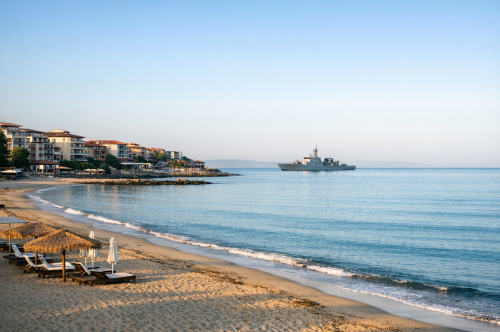
For a swim, the guide lists South Beach, about a kilometre from the old town, and the town beaches of Plakamoto and Buna. Sunbeds are quoted at €4.09 on its source, and water shoes are recommended on the shell and pebble surfaces. Beach facilities are seasonal, so expect little in October.
Plan a smart half-day
For a first visit, plan two to three hours for the main sights. A sensible shape is a morning or late-afternoon arrival, the Archaeological Museum first for context, St Stephen next, then the free lanes and sea walls, and lunch away from the most crowded seafront strip.
In the cooler months, keep an extra hour for walking and photos and finish before dark. If your accommodation is near Ravda, a shorter route to the old town may suit you better than a long loop through Sunny Beach.
Find your base near Nessebar on Bulgaria Escape
Planning a stay? Browse apartments, hotels and local services on bulgariaescape.com. Listings in Ravda put you close to Nessebar without the old-town parking limits, and you can compare options before you book. Visit bulgariaescape.com to see what is available for your dates.
Frequently Asked Questions
Newsletter
Join our subscribers list to get the latest news, updates and special offers directly in your inbox