 English
 български
 Deutsch
 Español
 Polski
 Русский
 Română
 Türkçe
 Українська


Ahtopol Travel Guide: History, Beach, Sights and How to Get There from Ravda
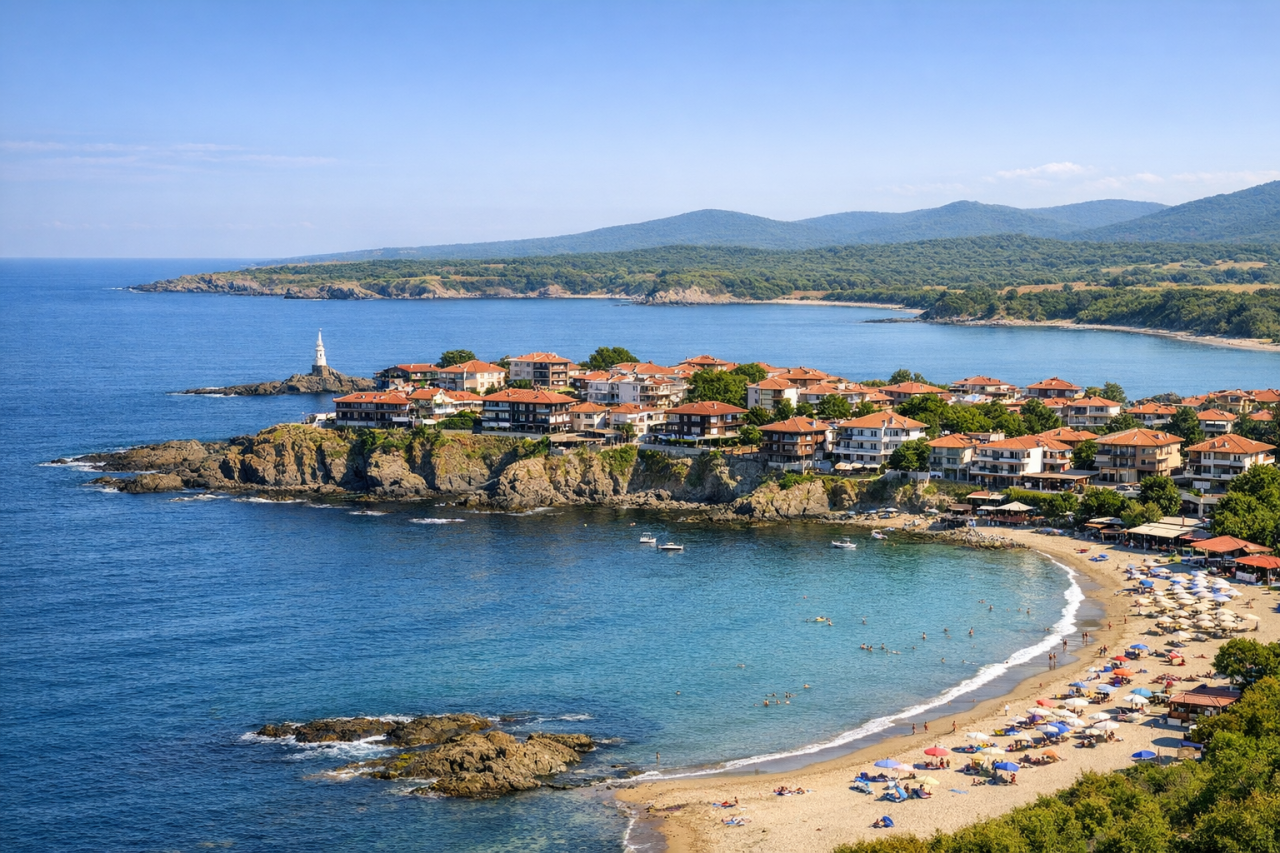
This Ahtopol travel guide is for visitors based in Ravda who want to see a quieter side of the Bulgarian Black Sea. Ahtopol is the southernmost town on the Bulgarian coast, a small seaside resort on a rocky headland close to the Turkish border, and it sits inside Strandzha Nature Park. It is far from the busy beaches of Sunny Beach and Nessebar, and that is exactly why people go.
Below you will find where Ahtopol is, a short history, the sights worth a stop, what to expect from the beach and the climate, how nearby Tsarevo fits in, and honest advice on getting there from the Burgas area. Every fact comes from the sources listed at the end, and where a detail could not be confirmed we say so instead of guessing.
Where Ahtopol is and why it feels different
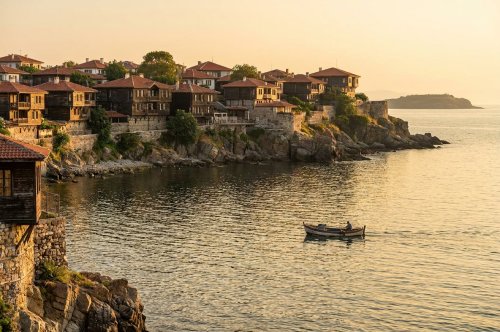
Ahtopol lies on a small rocky peninsula at the foot of the Strandzha mountain. According to the Strandzha Nature Park website, it is 14 km south of Tsarevo, 87 km southeast of Burgas and 477 km southeast of Sofia. Another local guide rounds the Burgas distance to about 90 km, so plan for roughly that on the road. Administratively the town belongs to Tsarevo municipality.
The town is small. The Strandzha Nature Park page gives a population of 1,288, and Wikipedia cites 1,286 residents in 2022. That is a village-sized community, which explains the calm atmosphere: family hotels, guest houses and a handful of restaurants rather than large resort complexes.
The setting is the main attraction. The sea is on three sides of the headland, the forested slopes of Strandzha rise behind the town, and the mild subtropical climate allows figs, olives, kiwi and palm trees to grow nearby. Wikipedia also notes that the area has the country's largest persimmon and pomegranate plantation, a detail that tells you how different the south feels from the northern coast.
A short history of Ahtopol
Ahtopol is old. Archaeological finds show people lived on the peninsula in the Stone and Copper Ages, and Thracians settled here in the Bronze and Iron Ages. Anchors recovered from the bay come from several periods: stone, lead and iron, which points to centuries of seafaring.
Researchers believe Athenians founded a colony here around 430 BC, and the town has carried many names over time, including Agathopolis, Peronticus in Roman times and Ahtabolu under the Ottomans. In the Middle Ages it was a busy merchant port that passed between Byzantium and Bulgaria.
After the Balkan Wars most of the Greek population left, and refugees from Eastern Thrace settled in the town. A major fire in October 1918 destroyed most of the old town, so the Ahtopol you walk through today was rebuilt on the site of the old one. That is worth remembering when you look for "old town" atmosphere: you will find a few historic buildings and a lot of charm, but not the intact museum-town feel of Nessebar or Sozopol.
What to see in and around Ahtopol
Plan on a slow walk rather than a checklist. The compact centre can be explored on foot in an hour or two, and the best moments are usually at the harbour and along the headland.
- Church of the Ascension. Built in 1796 according to the date on its altar, this stone church stands on a hill at the eastern end of the town above the sea. It is a one-room building with thick walls and a steep four-sided roof with pyramid-shaped skylights.
- St Yani (St John the Forerunner) monastery church. The Strandzha park site dates the monastery church to the 12th century and says it was partly preserved after the 1918 fire. Wikipedia also lists the monastery among the town's sights.
- Chapel of St Marina. One of the small buildings that survived the fire.
- Fortress remains and the fountain. Wikipedia mentions remains of a fortress wall up to 8 m high and a fountain with a carved horseman.
- Botanical gardens in nearby villages. Wikipedia lists collections in Serafimovo, Varvara and Sinemorets for plant lovers.
Opening hours and any entry fees for the churches were not stated in the sources we read, so ask locally or check at your hotel before you set out.
The beach, the sea and the weather
Ahtopol is a swimming-and-relaxing destination rather than a party one. A beach-guide page describes the peninsula as roughly 500 m long and 300 m wide, with calm, clear water and several bars and restaurants on or near the beach. The same page says visitors praise the quiet and the clear water, while some mention plastic waste and occasionally murky water, so conditions can vary from day to day.
Another guide gives the average July temperature as 22-23 degrees Celsius, with long days cooled by breezes from the Strandzha mountains. That is pleasant rather than scorching, which suits families and anyone who finds the northern resorts too hot in August.
Nearby beaches mentioned by the guide include Arapya, Atliman and Harmanite, all within reach of Ahtopol. If you want a different mood, the Veleka river beach at Sinemorets is also on this stretch of coast; see our Sinemorets guide on bulgariaescape.com for details.
Tsarevo, Strandzha and day-trip ideas
Tsarevo is the municipal centre, 14 km north of Ahtopol, and the natural place for supplies, banks and onward bus connections. Local tourism material groups it with other small resorts within an hour's drive of one another, among them Lozenets, Varvara, Sinemorets and Rezovo, the southernmost point of the Bulgarian coast.
Strandzha Nature Park is the real draw for walkers and cyclists. The park offers marked trails of different lengths and difficulty, and the beach-guide page also recommends the mountains for hiking and cycling. If you have a car, combine a morning on a forest trail with an afternoon swim.
Good half-day ideas include a harbour walk at sunset, a visit to one of the botanical gardens in the villages, and a lunch of fresh fish at a harbour restaurant. For seafood advice that applies along the whole coast, our guide to Black Sea seafood is a useful companion.
How to get to Ahtopol from Ravda
Ahtopol is a long way south of Ravda. Ravda is north of Burgas, so you first need to reach Burgas and then continue about 87-90 km south. We have not verified current timetables, so treat the following as a planning outline and confirm times at a bus station or with the operators before you travel.
- By car. The simplest option and the most flexible for Strandzha. Allow generous time, and check fuel and parking before you arrive in summer.
- By bus. A beach-guide page says regular bus and minibus services run from Burgas, Sinemorets and Rezovo through the southern coastal villages. Departure times change by season, so check them in advance, especially outside summer.
- Tourist information. The tourist information centres in Burgas are open Monday to Sunday, 10:00-18:00, according to a regional guide: one at the South Bus Station (Queen Joanna Square, +359 56 59 89 43) and one at "The Clock", 37 Aleksandrovska Street (+359 56 825 772).
Because the trip is long, many visitors treat it as an overnight stay rather than a day trip. Ahtopol offers family hotels, guest rooms and bungalow complexes, and the guides describe it as quieter than the larger resorts.
Practical tips and when to go
Summer is the easiest season for transport, open restaurants and swimming. In spring and autumn the town is quieter and some seasonal businesses may be closed, so confirm your hotel and a dinner option before you arrive.
Bring comfortable shoes for the cobbled streets and forest paths, a light jacket for sea breezes, and sun protection. Carry some cash for small places, although cards are widely accepted along the coast. Bulgaria has used the euro since 1 January 2026, so there is no currency exchange to worry about.
Finally, check the latest official notices on sea conditions before swimming or boating; our recent news posts on bulgariaescape.com summarise what officials have said.
Plan your Black Sea trip with bulgariaescape.com
Ahtopol rewards visitors who are happy to trade nightlife for quiet streets, clear water and forested hills. If you are staying in Ravda, treat it as an overnight escape or a long, rewarding road trip south. For apartments, local tips and more guides to the coast, visit bulgariaescape.com and plan your next Black Sea day out with us.
Sources
- Ahtopol - Strandzha Nature Park - Strandzha Nature Park, accessed 26 Oct 2026
- Ahtopol - Wikipedia - Wikipedia, accessed 26 Oct 2026
- Ahtopol Beach - Beach Atlas, accessed 26 Oct 2026
- Ahtopol - VisitBulgaria.com, accessed 26 Oct 2026
Disclosure: this article contains affiliate links. If you book or buy through them, bulgariaescape.com may earn a small commission at no extra cost to you.
Frequently Asked Questions
Newsletter
Join our subscribers list to get the latest news, updates and special offers directly in your inbox