 English
 български
 Deutsch
 Español
 Polski
 Русский
 Română
 Türkçe
 Українська


Bulgaria Tourism Minister Says Coast Stays Safe: Talks With Germany and Poland
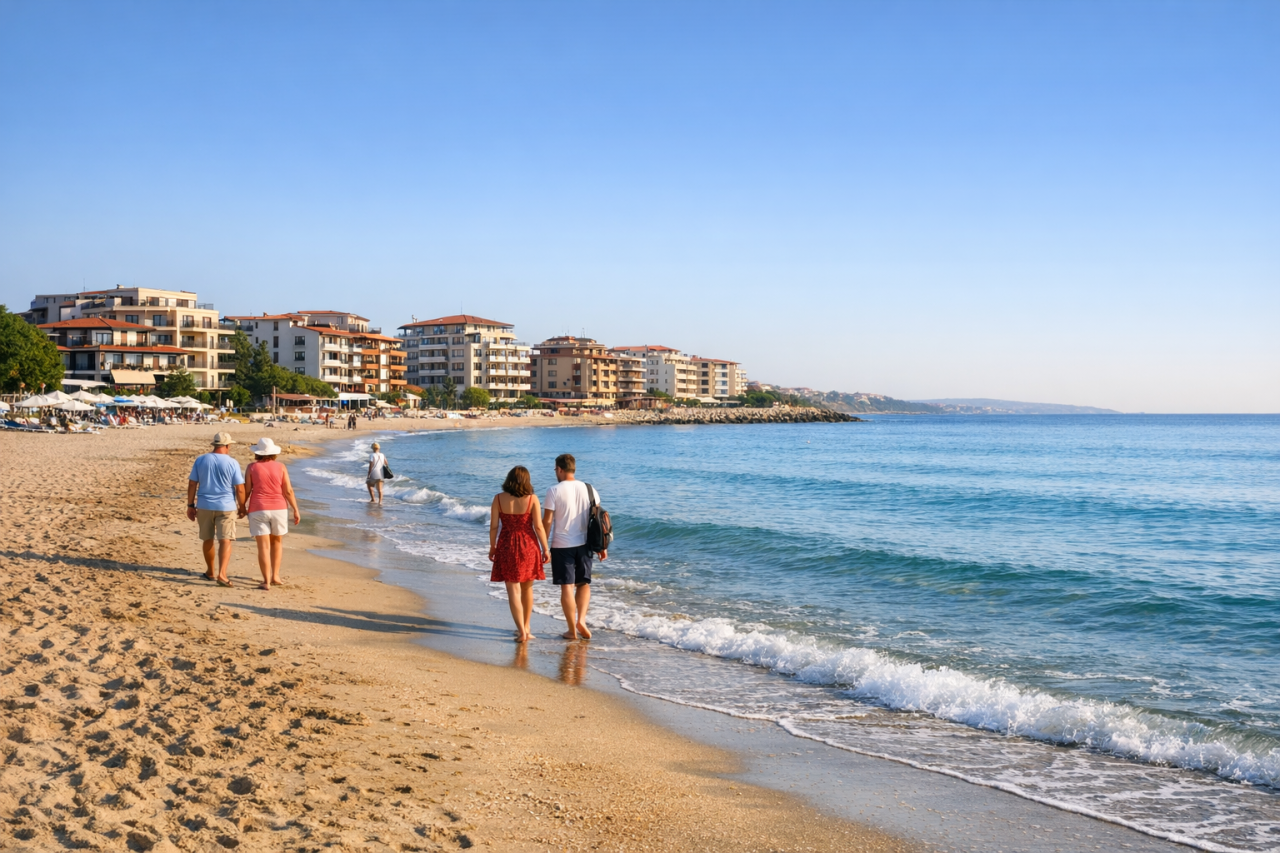
The Bulgaria tourism minister Ilin Dimitrov said on 19 October 2026 that Bulgaria remains a safe and calm destination and that the situation in the Black Sea region does not hurt how the country is seen in key European markets. He spoke during an online meeting with Bulgaria's tourism attachés for Germany and Poland. The same day, Bulgarian media also reported that hoteliers see slower early bookings for summer 2027 after the drone attacks on ships. This report sets the two messages side by side, shows what is actually documented, and flags what is still missing: hard numbers.
What the minister said on 19 October
According to Eurocom, published on 19 October 2026 at 18:21, Minister of Tourism Ilin Dimitrov held an online meeting with the tourism attachés in Germany and Poland, Tihomir Patarinski and Nikolay Kostov. The ministry says the talks focused on reservation trends and preparations for the next season.
Dimitrov said the current situation in the Black Sea region does not negatively affect how Bulgaria is perceived in the main European markets, and that the country keeps its status as a safe and calm tourist destination. A second report, from 24 Chasa on the same day, quotes him in Bulgarian saying that now is the moment to build on the good positions Bulgaria holds in these markets and that the country is being confirmed as a safe destination for year-round tourism.
He set practical goals: new partnerships with tour operators, better transport connectivity and stronger visibility for Bulgaria next season. These are plans, not results. None of the reports I read gives a budget, a date for the planned events, or a named tour operator.
Germany and Poland: what the ministry reports
On Germany, the ministry says reservations are developing better than at the same point last year. The Site, also on 19 October, adds that this comes from talks with travel agencies that actively sell holidays in Bulgaria. No percentages or booking totals were given in any of the reports I read.
On Poland, the ministry says Polish tourists do not connect the regional situation with their holidays in Bulgaria. Attaché Nikolay Kostov reported on tourism fairs in Poland, including the latest one in Poznan, and said conversations with potential tourists and industry representatives show no drop in interest. Again, no figures were published.
Dimitrov also tasked staff with arranging talks with leading Polish tour operators and developing joint advertising campaigns. A large event in Bulgaria aimed at Polish tour operators was discussed. Eurocom notes that in July the ministry had already prepared business-to-business meetings and a presentation for the Polish sector to promote year-round travel.
For Ravda and the wider Nessebar area, the relevance is that both markets appear in the airport traffic data discussed below. But a ministry statement based on talks with attachés and agents is a signal about sentiment, not a count of confirmed bookings.
The other side: hoteliers report slower bookings
On the same day, Eurocom republished a bTV report with a less comfortable message. Representatives of the sector described a noticeable slowdown in early bookings for summer 2027 and growing hesitation among foreign tourists after the drone attacks on commercial ships in the Black Sea.
Hotelier Rumen Monchev said bookings tied to the Eurovision edition in Burgas slowed sharply: his hotel went from several bookings a day to none for several days. He said the attacks will probably delay the industry's goal of a 20 percent share of GDP.
Hristina Slavova of the Regional Tourist Chamber in Burgas gave a more measured view. She said the effect so far is mainly reputational rather than direct, that early bookings usually peak in December and January, and that charter programmes from main markets remain planned. She urged institutions to send clear and coordinated messages to international partners.
The report also recalls two official events. On 13 October 2026, Vice President Iliana Yotova called for a moratorium on drones in the Black Sea after strikes on two commercial ships. On 9 October, the Black Sea Region Basin Directorate reported that water samples near Kaliakra, Byala and Sozopol showed no pollution after the incidents.
These two stories are not necessarily in conflict. A minister speaking about German and Polish agents, and a hotelier speaking about his own phone, describe different parts of the market. The honest summary is that the evidence is mixed and anecdotal on both sides.
Context: how the 2026 season and the airports looked
For perspective, here is what earlier, dated reports say. On 4 September 2026, Eurocom quoted Rumen Draganov of the Institute for Analyses and Assessments in Tourism saying the southern Black Sea coast was full with heavy demand until 12 September, that August was the peak, and that the summer season was expected to run until 8 October, compensating for a weak start. He also said the peak is concentrated in about 45 days.
On 1 September 2026, Fraport Bulgaria reported that Burgas and Varna airports together passed 3 million passengers since 1 January. The company expects 2026 traffic to exceed 2025 but remain below 2019. Poland, Israel, Hungary, Slovakia, Belgium and France showed double-digit growth, while the German market declined significantly after a partnership between two airlines ended. Burgas reopened on 1 May after a runway rehabilitation project worth more than €60 million, and a Ryanair route to Rome is among the new markets.
This matters when reading the minister's message. The Germany claim concerns reservations for the next season compared with last year, while Fraport's German decline concerns passenger traffic this year. They can both be true. They measure different things and different periods.
The Eurocom report of 19 October also mentions an expectation, from an earlier July article, of about 5 percent growth in visitors to the Black Sea coast in 2026. I did not open the July article, so treat that figure as second-hand and check the original.
What this means for visitors and property owners
For travellers, nothing in these reports changes basic planning. The ministry's message is that the destination remains safe, the hoteliers' message is about demand, not about danger, and no report I read announced closures of beaches, hotels or flights. Travellers who want certainty should follow their own government's travel advice and check airline and operator notices.
For owners and hosts, the useful signals are timing and market mix. Slavova's remark that early bookings peak in December and January suggests the real picture for summer 2027 will be clearer after the new year. If you rent out property in Ravda, consider flexible cancellation terms for the early months, and keep your listing information current so that Polish and German guests can find clear photos, prices and rules.
Prices are the other open question. None of the reports gives figures for next summer's rates, so do not assume either a rise or a fall.
What to watch next
Three items are worth tracking. First, the Polish tour operator event the minister discussed: no date was given. Second, the 19th Black Sea Tourism Forum in Varna on 30 and 31 October 2026, organised by the Varna Tourism Chamber with the Ministry of Tourism among its partners, which includes sessions on smart destinations. Third, the early-booking figures from tour operators in December and January, when Slavova says bookings usually peak.
Watch also for any statistics from the National Statistical Institute or the ministry that put numbers behind the sentiment. When they appear, they will be more reliable than any quote.
Find your coastal stay on Bulgaria Escape
Whatever the headlines say, the Bulgarian coast keeps welcoming guests, and Ravda remains a calm base between Nessebar and Sunny Beach. Browse verified listings on bulgariaescape.com, compare apartments and houses for 2027, and contact owners directly to discuss dates and flexible terms.
Sources
- Bulgaria remains a safe destination for tourists despite the situation in the region - Eurocom.bg, 19 October 2026
- Ilin Dimitrov: The situation in the Black Sea does not affect tourism in Bulgaria - 24 Chasa, 19 October 2026
- Tourism in Bulgaria: reservations from Germany grow, Polish interest stays stable - The Site, 19 October 2026
- Drone attacks in the Black Sea hit tourism: 2027 reservations are slowing - Eurocom.bg, citing bTV, 19 October 2026
- Extended season on the Black Sea compensates for the weak start - Eurocom.bg, 4 September 2026
- Fraport Twin Star marks 3 million passengers in 2026 - Fraport Bulgaria, 1 September 2026
- Varna Black Sea Tourism Forum 2026: artificial intelligence - The Site, undated page read 20 October 2026 (forum dates 30-31 October)
Frequently Asked Questions
Newsletter
Join our subscribers list to get the latest news, updates and special offers directly in your inbox